My research lies at the intersection of philosophy, psychology, and neuroscience, with a particular focus on memory, narrativity, and human sociality. I approach these topics by bringing empirical findings into sustained dialogue with philosophical analysis. Rather than treating psychological and neuroscientific research merely as background, I use it to identify conceptual problems, constrain theoretical possibilities, and develop accounts that are both philosophically rigorous and empirically informed. Across my work, I am especially interested in how cognitive capacities such as memory and narrative contribute to our understanding of ourselves, other people, and the social world. Below, I highlight several of the research questions I have pursued and the publications that grew out of them.

Narrative Explanation and the Narrative Self
Nazim Keven
My work examines what makes an account of a life genuinely narrative. Although narrative theories of the self often claim that stories shape our self-conception and agency, there is little agreement about what distinguishes a narrative from a mere chronological sequence of events. I argue that narratives do more than arrange events in time: they explain how those events are connected. To clarify the nature of this explanatory structure, I develop a teleological account of narrativity, according to which narratives organise sequences of events around agents’ goals, attempts, obstacles, and outcomes. This account is substantive enough to exclude trivial event sequences from counting as narratives, while remaining flexible enough to accommodate ordinary lives that may not conform to highly dramatic or literary story forms. In this way, the teleological approach helps clarify the concept of narrative and addresses several recurring objections to narrative accounts of the self.
Related publication:
“What Is Narrativity?”, Ratio (2024)
Episodic Memory and the Evolution of Cooperation
Nazim Keven
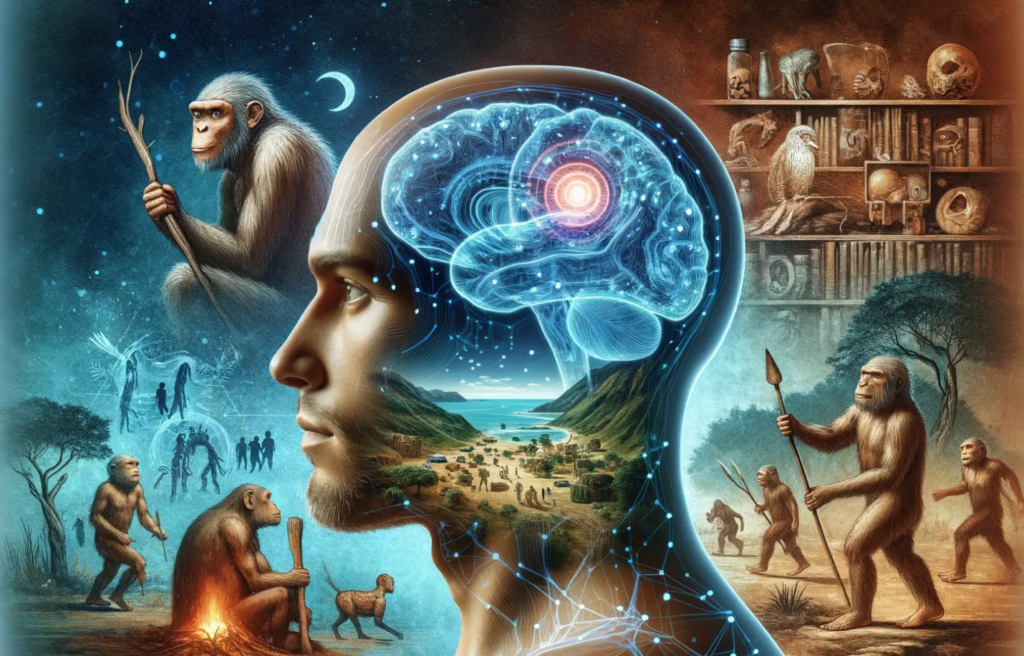
My work examines whether episodic memory helps sustain cooperation by allowing us to remember the past behaviour of others. The dominant view holds that episodic memory primarily supports future-oriented thought by enabling us to simulate possible events and plan flexibly. I develop an alternative account according to which episodic memory also has an important social function: it provides detailed information about who has behaved cooperatively, who has cheated, and who can be trusted. Theoretical models of reputation-based cooperation show that groups can maintain cooperation when individuals use information about others’ past conduct to choose reliable partners and avoid exploitative ones. On this view, episodic memory facilitates the exchange of reputational information, improves partner choice, and reduces the risks associated with interacting with cheaters. If this account is correct, episodic memory may have played an important role in the evolution of human cooperation.
Related publications:
Episodic Memory for Gossip, the Memory Palace Substack (2024)
“Can Episodic Memory Deter Cheating and Promote Altruism?”, Synthese (2024)
The Development of Preschoolers’ Understanding of Culpability
Reyihanguli Alimujiang (Bilkent), Nazim Keven(Bilkent), Jedediah Allen (Bilkent)
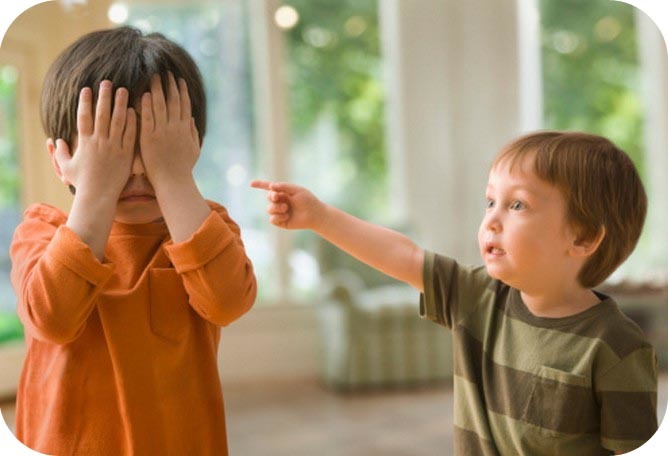
Our work investigates how preschoolers come to incorporate intentions into their judgments of culpability. Although adults generally regard intentional harms as more blameworthy than equivalent accidental harms, young children are often described as beginning with an outcome-focused form of moral judgment and only later becoming sensitive to intention—a developmental pattern known as the outcome-to-intention shift. Rather than relying on explicit measures such as responses to story vignettes, we use children’s spontaneous tattling behaviour as an implicit measure of moral evaluation. Our preliminary findings suggest that children are more likely to tattle when a norm violation is committed intentionally than when it results from a false belief, indicating that sensitivity to intention may emerge earlier than standard explicit tasks suggest. The project was interrupted by the COVID-19 pandemic before the study could be completed.
Narrative Construction in Episodic Amnesia
Nazim Keven, Jake Kurczek (Haverford), Shayna Rosenbaum (York) and Carl Craver (WUSTL)
Our work examines whether the medial temporal lobes are required not only for remembering past experiences and generating episodic details, but also for constructing coherent narratives. To test this, we asked individuals with severe episodic amnesia resulting from focal bilateral medial temporal lobe damage to construct a narrative from a 24-page children’s picture book. Despite their substantial memory impairments, they produced narratives that were as coherent as those of healthy controls. These findings suggest that the medial temporal lobes are important for generating episodic details, but are not necessary for organising information into a coherent narrative. More broadly, the results challenge accounts that assign the medial temporal lobes a general role in constructing coherent fictitious or future scenes and events.
Related publication:
“Narrative Construction is Intact in Episodic Amnesia”, Neuropsychologia (2018)
Episodic Memory in Non-Human Animals
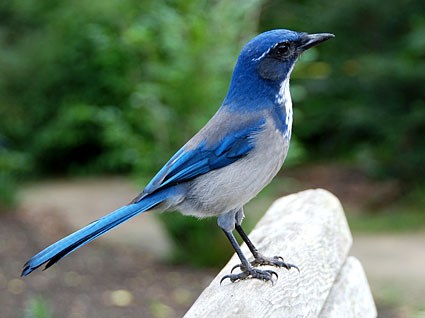
Whether non-human animals can remember episodically remains a central controversy in comparative cognition. Some researchers argue that episodic memory is uniquely human because it involves capacities such as mental time travel, autonoetic awareness, and metarepresentation, while others point to evidence that animals can remember what happened, where it happened, and when. I defend a kind-sceptical view in this debate. I think non-human animals have memories of their past experiences, but these memories are of a different kind from human episodic memory. My work argues that the debate is often obscured by an overly broad conception of memory. I distinguish between event memory and episodic memory: event memory preserves snapshot-like perceptual information about past experiences and supports short-term, goal-directed behaviour, whereas episodic memory organises such information into a temporally, causally, and teleologically structured narrative. On this view, non-human animals can remember past events, but their memories lack the inferential organisation that characterises human episodic recollection. Clarifying this distinction, I argue, helps explain both the genuine continuities and the important differences between human and animal memory.
Related publications:
“Events, Narratives and Memory”, Synthese (2016)
“Carving Event and Episodic Memory at Their Joints”. Behavioral and Brain Sciences (2018)
“What does it take to remember episodically?” Current Controversies In Philosophy of Memory (2022)

Moral Judgment in Episodic Amnesia
Carl Craver (WUSTL), Nazim Keven (Bilkent), Donna Kwan (York), Jake Kurczek (Haverford), Melissa Duff (Iowa) and Shayna Rosenbaum (York)
Our work examines whether the hippocampus and medial temporal lobes contribute to moral judgment through their role in episodic memory and imagination. Individuals with episodic amnesia caused by hippocampal damage have difficulty recalling past events, imagining future events, and constructing vivid scenes, making them especially informative for testing theories that link moral judgment to episodic simulation. According to prominent dual-process accounts, vividly imagining personal and emotionally charged scenarios should encourage deontological rather than utilitarian responses. If this is correct, people with impaired episodic imagination should make more utilitarian judgments than healthy controls. We found that they do not. Our results therefore suggest that episodic memory and future-oriented imagination are not necessary for the distinctive effect that personal and emotionally salient scenarios have on moral judgment.
Related publication:
“Moral Judgment in Episodic Amnesia”. Hippocampus (2016)
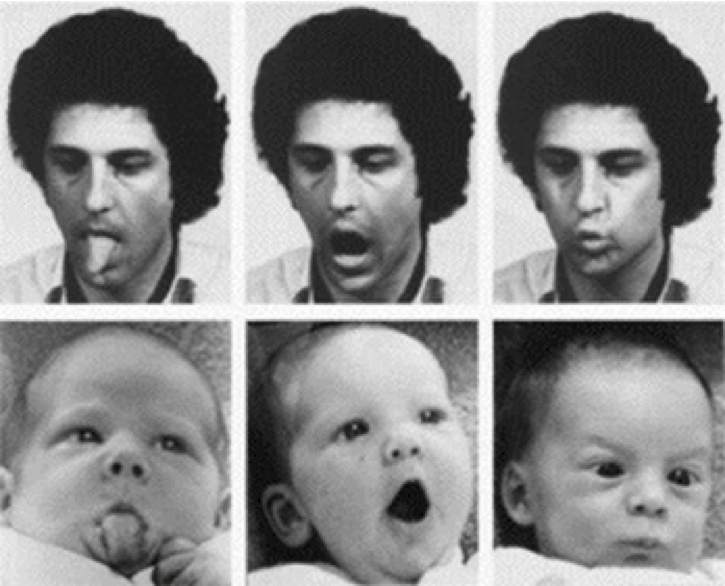
Neonatal Imitation in Context
Nazim Keven and Kathleen Akins (SFU)
Whether human neonates can imitate facial gestures has remained controversial since Meltzoff and Moore’s influential 1977 study. Our work approaches this debate by examining an often neglected question: what role do neonates’ spontaneous orofacial behaviours play in normal development? Focusing on tongue protrusion and retraction, we draw on research on mammalian aerodigestive development and activity-dependent neural maturation to argue that these movements may contribute to the acquisition of tongue control, the coordination of aerodigestive motor systems, and the formation of sensorimotor cortical maps. On this account, neonatal orofacial stereotypies are not primarily imitative gestures but developmentally functional behaviours involved in the maturation of sucking, swallowing, and later feeding. Because these behaviours emerge and disappear as part of a structured developmental sequence, their occurrence in imitation experiments may be better explained by aerodigestive development than by an innate capacity for facial imitation.
Related publication:
“Neonatal Imitation in Context: Sensory-Motor Development in the Perinatal Period”. Behavioral and Brain Sciences (2017) (Target Article)